
News

Google’s Lyria 3: Why Some Musicians Embrace It While Others Fight It

Google just made its AI music generator, Lyria 3, available to everyone through the Gemini app last week. Within days, the music world split into two camps: artists experimenting with it as a creative tool, and artists warning it threatens human creativity itself. The divide isn’t theoretical. Real musicians are using Lyria 3 in production, […]

Google’s Lyria 3: Why Some Musicians Embrace It While Others Fight It Read More »
Apple, Google, and Microsoft are converging on the same app design problems

For a long time, “cross-platform UI” debates focused on aesthetics: Cupertino restraint versus Material boldness versus Fluent depth. But if you zoom out from visual style, Apple, Google, and Microsoft now spend an increasing amount of their design guidance on the same three practical problems: The convergence isn’t accidental. It’s a response to the same

Apple, Google, and Microsoft are converging on the same app design problems Read More »

Agent mode in Android Studio is the biggest shift in Android development in years

For the past decade, AI in code editors meant one thing: smarter autocomplete. Better suggestions, context-aware completions, maybe a chat window to ask questions. Useful, but incremental. AI was a passenger in your IDE – you drove, it occasionally pointed out shortcuts. Agent Mode in Android Studio changes that relationship entirely. And if you haven’t

Agent mode in Android Studio is the biggest shift in Android development in years Read More »

Google is quietly redefining what ‘tablet support’ means for Android apps

For years, “tablet support” in Android circles had a narrow, almost forgiving definition: the app doesn’t look too blown up on a bigger screen. Maybe it runs in landscape. Maybe there’s a two-pane layout if a product team was feeling ambitious. If it didn’t crash, it counted. Google’s latest large-screen messaging shifts that definition in

Google is quietly redefining what ‘tablet support’ means for Android apps Read More »

AI in IDEs is shifting from autocomplete to understanding codebases

For the last couple of years, “AI in the IDE” mostly meant one thing: faster typing. Autocomplete models became better at predicting the next line, the next block, the next function. Useful—especially for boilerplate—but still fundamentally local: the model reacts to what’s on screen. What’s changing now is scope. The major IDE assistants are steadily

AI in IDEs is shifting from autocomplete to understanding codebases Read More »

Multi-window usage is growing, and many apps still aren’t ready

Multi-window used to be a “tablet nice-to-have.” In 2026, it’s closer to a default expectation—driven by larger phones, foldables, desktop-style modes on Android, and iPad workflows that increasingly look like light desktop computing. On the Android side, Google frames large screens as a fast-growing segment and urges developers to “build for every device” by progressively

Multi-window usage is growing, and many apps still aren’t ready Read More »

Why developers trust AI more for refactoring than writing new code

AI assistants are now embedded in most mainstream development workflows, but how developers use them is more conservative than the product demos suggest. A consistent pattern shows up across major developer surveys and platform telemetry: developers are more comfortable letting AI modify existing code than asking it to invent new logic from scratch. That preference

Why developers trust AI more for refactoring than writing new code Read More »

Multi-window usage is growing, and many apps still aren’t ready

Multi-window usage is no longer a niche feature for power users. On tablets, foldables, and desktops, running apps side by side has quietly become normal behavior. The problem? Many apps still behave as if they’ll always be full screen. As multi-window becomes more common, that assumption is starting to break – visibly. Multi-window is now

Multi-window usage is growing, and many apps still aren’t ready Read More »

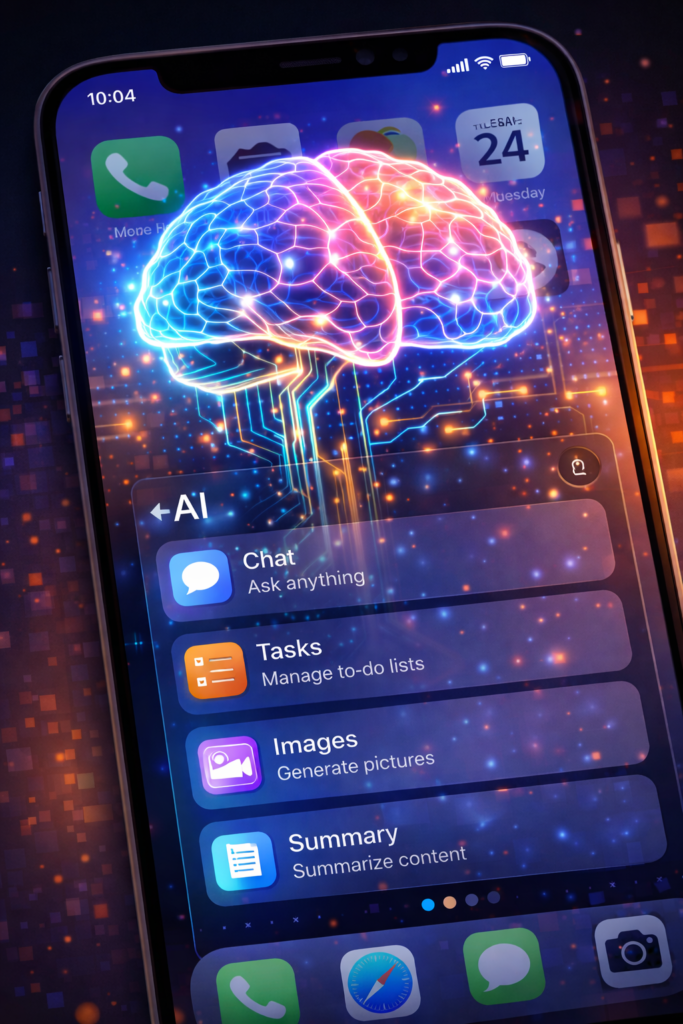
Apple, Google, and Samsung Are All Betting on On-Device AI

Apple, Google, and Samsung are all betting on on-device AI

Apple, Google, and Samsung are increasingly shifting AI features from the cloud to the device itself, signaling a major change in how smartphones handle artificial intelligence. Instead of sending everything to remote servers, more tasks are now processed directly on phones, tablets, and laptops. What on-device AI means On-device AI allows features like: to run

Apple, Google, and Samsung are all betting on on-device AI Read More »

Scroll to Top