
Coding

Breaking the “Fixed Screen” Assumption

Android 17 Is Removing Your Orientation Escape Hatch — Here’s What That Means

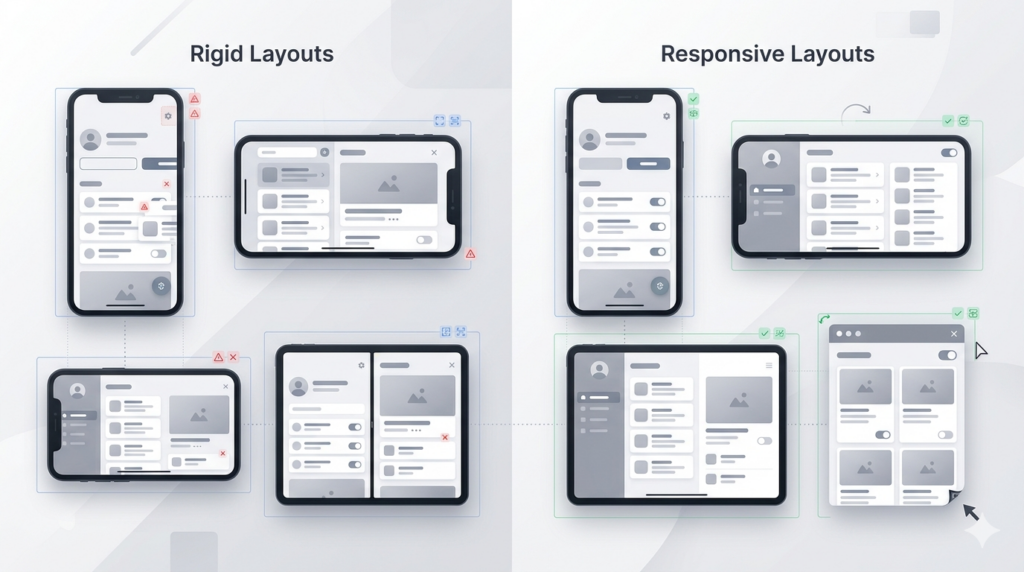
Google isn’t just encouraging adaptive apps anymore. With Android 17, the opt-outs are going away. If your app assumes a fixed screen shape, the clock is running. For a long time, Android gave developers a quiet way out. If your app wasn’t ready for resizable windows or unexpected orientations, you could declare it in the […]

Android 17 Is Removing Your Orientation Escape Hatch — Here’s What That Means Read More »

google gemini

Google’s Experimental Gems might be the most underrated developer tool of the year

They look like a chatbot feature. They’re actually something closer to a no-code app builder — and if you’re a developer drowning in repetitive AI interactions, they’re worth a serious look. I’ll be honest: when I first saw Google announce Experimental Gems inside Gemini, I assumed it was just a rebrand of their existing Gems

Google’s Experimental Gems might be the most underrated developer tool of the year Read More »

AI in IDEs is shifting from autocomplete to understanding codebases

For the last couple of years, “AI in the IDE” mostly meant one thing: faster typing. Autocomplete models became better at predicting the next line, the next block, the next function. Useful—especially for boilerplate—but still fundamentally local: the model reacts to what’s on screen. What’s changing now is scope. The major IDE assistants are steadily

AI in IDEs is shifting from autocomplete to understanding codebases Read More »

Why developers trust AI more for refactoring than writing new code

AI assistants are now embedded in most mainstream development workflows, but how developers use them is more conservative than the product demos suggest. A consistent pattern shows up across major developer surveys and platform telemetry: developers are more comfortable letting AI modify existing code than asking it to invent new logic from scratch. That preference

Why developers trust AI more for refactoring than writing new code Read More »

The biggest time-wasters in app development — and how devs are fixing them

Ask any mobile developer what slows them down and you’ll hear about slow builds, flaky tests, and debugging device-specific issues. But talk to them for longer, and you’ll discover the real time-wasters aren’t always technical — they’re systemic problems that creep into every project and steal hours without anyone noticing. I’ve been tracking what actually

The biggest time-wasters in app development — and how devs are fixing them Read More »

What breaks first when your app goes multi-device (and how to avoid it)

The first thing to break is almost always the layout. Common symptoms: These issues don’t show up on emulators with a few preset sizes. They appear when: Why it happensLayouts were designed for fixed dimensions, not flexible ranges. How to avoid it 👉 Designing apps that actually feel good on phones, tablets, and foldables If

What breaks first when your app goes multi-device (and how to avoid it) Read More »

Small workflow changes that save hours every week for app developers

The biggest productivity gains in mobile development don’t come from learning the hottest new framework or adopting the latest architecture pattern. They come from tiny workflow adjustments that eliminate friction from tasks you do fifty times a day. I’m talking about the small stuff: switching between files, running builds, checking designs, testing on devices. Individually,

Small workflow changes that save hours every week for app developers Read More »

I let AI write part of my code — here’s where it worked and where it failed

For the past six months I’ve been deliberately using AI to write significant portions of production code for a mobile app. Not just autocomplete suggestions or small helper functions — actual features, full components, complex logic. I wanted to understand, in practical terms, where AI genuinely helps and where it creates more problems than it

I let AI write part of my code — here’s where it worked and where it failed Read More »

Why responsive layouts still matter more than new form factors

Every year tech media gets excited about the next device category that’s supposedly going to change everything. Foldables! AR glasses! Wearables! Smart displays! And every year, mobile developers face the same question: should we redesign our apps for these new form factors? Here’s what rarely gets discussed in those breathless product announcements: while you’re optimizing

Why responsive layouts still matter more than new form factors Read More »

Scroll to Top